menu

IMA Group has formally submitted its near-term, science-based emissions reduction targets, aligned with a 1.5°C pathway, to the Science Based Targets initiative (SBTi) for validation.
This submission represents a key milestone within our Climate & Resources priority and our DEEP approach for Sustainability, where Decarbonising Our Value Chain is a core area of action.
The Science Based Targets initiative provides a globally recognised framework that helps companies set greenhouse gas (GHG) emissions reduction targets in line with climate science and the goals of the Paris Agreement. By submitting our targets, we are reinforcing a structured and transparent decarbonisation pathway across our operations and value chain.
Specifically, we have submitted two near-term targets with a 2030 target year:
These targets reflect our ambition, as an industrial group, to contribute to the rapid and deep emissions reductions needed this decade. They are currently under review and will become official once validated by the SBTi.
Through this step, we are further strengthening the integration of climate science into our strategy and operations, supporting the transition towards a low-carbon economy.
Embedding SBTi into our DEEP approach
This commitment is fully embedded in our DEEP approach for Sustainability, where Decarbonising Our Value Chain represents a core area of action. By setting science-based targets across Scopes 1, 2 and 3, we reinforce the strategic levers that drive climate progress across our operations, technologies and partnerships.
From renewable electricity sourcing and energy efficiency in our facilities to the development of lower-energy machines and collaboration with suppliers, our initiatives are designed to support a measurable reduction of emissions across the value chain. In this context, the SBTi provides the scientific framework that ensures our actions contribute meaningfully to global climate goals.
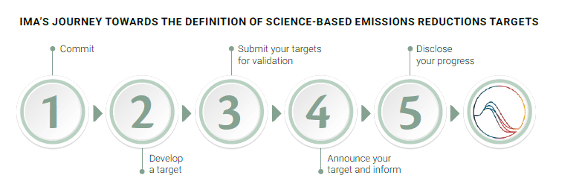
A structured journey towards decarbonisation
We are proud to share the progress of our sustainability journey, a path that began over a decade ago and continues to evolve with ambition and responsibility.
Our approach is built on four strategic priorities: Climate & Resources; People & Empowerment; Innovation & Product Responsibility; Ethics, Governance & Transparency. These priorities guide every decision we make and frame the actions that support our decarbonisation goals.
Since 2013, we have taken significant steps to integrate sustainability into our business model. These include the publication of our first Sustainability Report and the quantification of our greenhouse gas (GHG) emissions, the definition of a company-wide sustainability roadmap, and the development of OPENLab, our global network supporting packaging innovation from material understanding to industrial implementation (link to OPENLab page). Together, these initiatives have laid the foundation for a structured and measurable climate strategy.
Since 2021, we have monitored all emissions relevant to our business in line with the GHG Protocol, establishing the necessary baseline to set credible reduction targets and track progress over time. Since 2023, we have strengthened supplier engagement through the Sustainability Program X Suppliers, recognising that supply chain emissions represent one of the most significant categories in our carbon footprint. Collaborating with suppliers is therefore essential to drive meaningful reductions and support shared decarbonisation objectives.
Together, these actions have built the foundation for our climate strategy: understanding our emissions, engaging our value chain and establishing the operational levers needed to reduce them. The SBTi framework now provides the scientific reference that allows us to focus these efforts and align them with global climate goals.
By consistently measuring and reporting our carbon footprint, improving energy efficiency, sourcing renewable electricity and applying ecodesign principles, we are translating our commitments into concrete actions. Together, these efforts enable us to reduce lifecycle impacts, support our customers’ sustainability goals and turn climate challenges into opportunities for innovation and long-term growth.