
menu

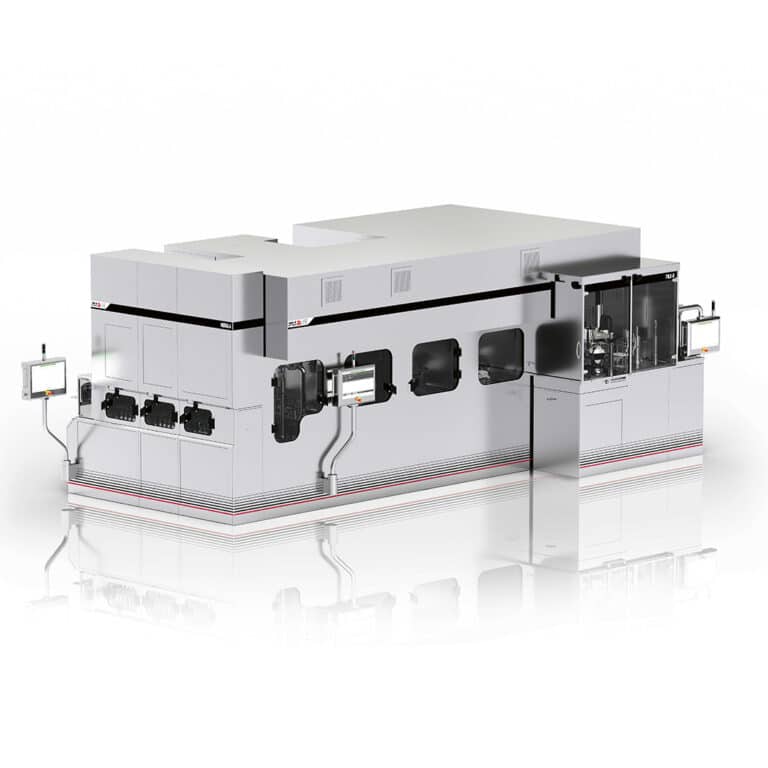
An equipment line-up ensuring the best product characteristics, the most efficient processing methods and the versatility to suit a broad variety of demands and packaging options.
 TILE-X WINNER OF BIOTECH INNOVATION AT INTERPHEX NY 2025 EXHIBITOR AWARDS
Following upstream bag/tub/tray-opening using robotics to minimise operator intervention, the Ready-To-Use component is ready to enter our very latest innovation, TILE-X, a unique, ground-breaking solution providing 100% gloveless processing within its own self-sufficient HVAC system and Grade A environment. Feeding of Ready-To-Use components into the TILE-X modules can be carried out with No-Touch-Transfer technology or other compact solutions for RTU tub/tray surface decontamination. Implementing electromagnetic levitation technology, programmed floating shuttles move the containers to filling and closing stations, and thanks to the flexibility of this system, TILE-X allows implementation of a gloveless modular construction philosophy, where each module handles a single phase of the process: introduction of RTU components, delidding and denesting, filling with 100% check-weighing, capping, and crimping. Perfect for high-value drugs, such as biopharmaceuticals and ATMPs with a focus on cell and gene therapies, with small-batch production, TILE-X processes 40 units/min. and with frictionless component handling, zero particulate is generated. Subsequent processing and packaging stages are fully integrated into this ground-breaking line.
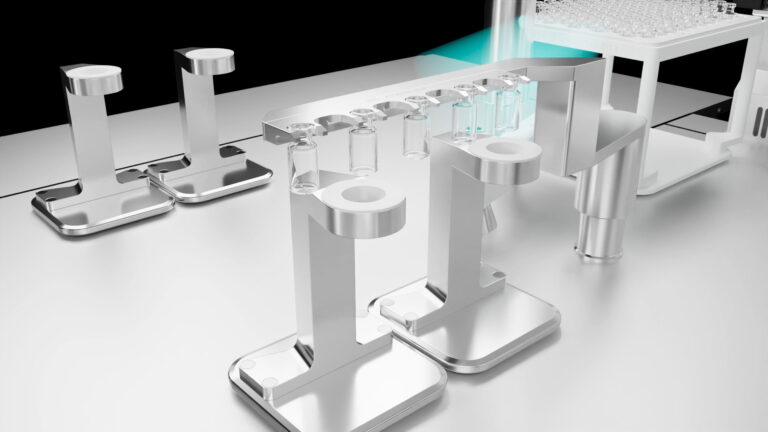
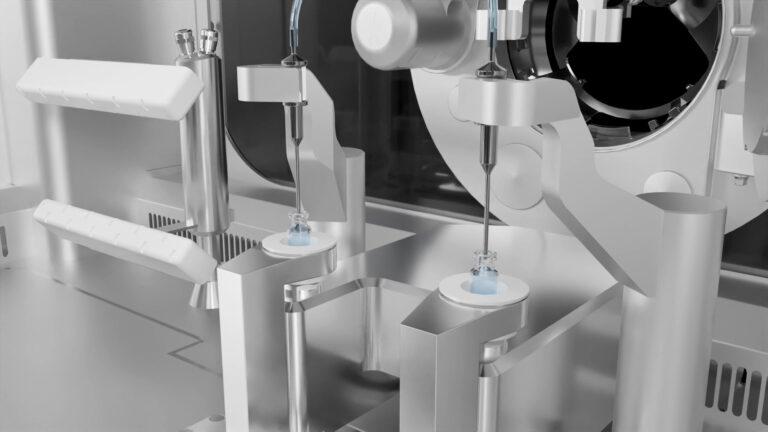
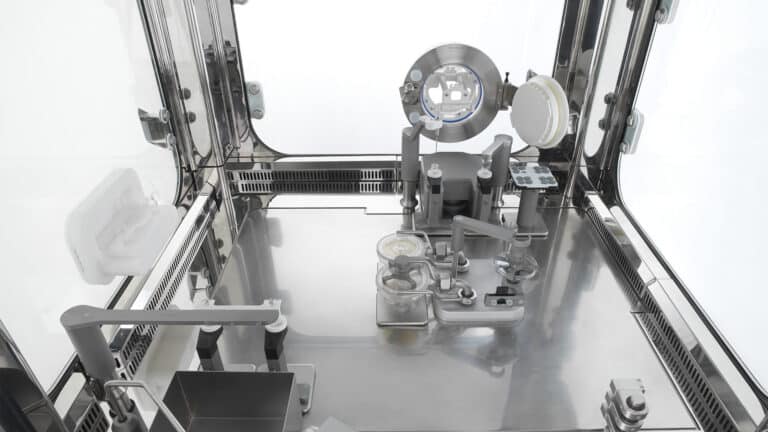
Enhanced sterility assurance, gloveless efficiency, robotic accuracy. Based on electromagnetic levitation, TILE-X is a compact, Grade A, modular processing unit for high-value pharmaceuticals such as ATMPs.
TILE-X can fill and close vials, syringes and pre-capped cartridges supplied in RTU packages.
TILE-X can handle:
TILE-X is designed to be loaded with containers supplied mainly in tubs with single or double bag packages.
The layout of TILE-X modules can be configurated to produce up to 40 2R vials/min.
This type of layout configuration is under design.
The TILE-X module can automatically orient and place:
Two possible configurations:

TILE-X can be installed in two configurations:
TILE-X has been designed especially for products that use single-use SUS filling circuits. The main reason is to allow the automatic assembly of the filling needles without the use of gloves, therefore the peristaltic or Time-Pressure dosing systems are outside the isolator on a dedicated module. This solution also allows correct management of the cooling and shaking of the main product bag if required by the biological product.
Different requirements will be evaluated together with the customer.
As per peristaltic pump standards. For any specific requirements, product tests will be carried out at IMA Life R&D development lab.
Currently our standard for normal machines is ±7mg. For any specific requirements, product tests will be carried out at IMA Life R&D development lab.
TILE-X uses an integrated and modular ventilation system to minimise space requirements, enabling installation in a cleanroom (height <3m) without the need for an HVAC system. For toxic products requiring high-containment configurations, a custom solution can be evaluated. Meanwhile, biohazard solutions up to BSL-2 can be accommodated with the integrated ventilation system, as post-batch deactivation strategies with VHP are feasible.
TILE-X is provided with disaster recovery strategies and can activate dedicated filling recipes to avoid using the filling nozzle with the damaged weight cell.
Automatically. A dedicated shuttle bringing the sample weight will reach the cell and perform the control operations. This process will be done at the beginning of the batch and at any time the operator will require it.
As standard, we use RTP XS190 manually operated from outside the isolator. Other RTP port sizes can be evaluated.
Yes, the closure feeding system is Annex 1-compliant, both during installation and during operation. Thanks to the automatic transfer of all closure feeding system components into their final working position, the installation is operated after VHP with the isolator door closed.
Capping is performed in a Grade A environment.
Capping unit, adjustable in height, equipped with 2 operating heads; sealing is carried out by means of vial rotation from the supporting plate and from the head that are mechanically synchronized, sealing through idle roller that guarantees low particle generation. Loading cells are present to control the applied closure force.
The decontamination principle of TILE-X follows a classic approach with vaporised dry H2O2, a well-established method used in IMA isolators. The chamber size and the absence of high-absorption parts such as gloves limit the cycle time.
The presence of air-heated phase in the aeration strategies to accelerate internal chamber desorption could allow 0.1 ppm to be reached in a relatively short time, to be evaluated during cycle development. The decontamination time to reach 0.1 ppm will therefore be assessed during the cycle development phases, using highly sensitive instruments, as standard electrochemical sensors (e.g. Drager) cannot achieve this level of sensitivity. The materials used in the chamber are suitable in terms of chemical resistance and desorption risk.
This solution is available upon request.
The isolator’s tightness is qualified at 2% and follows ISO 10648 method. This limit falls within Class 4 of the ISO standard. It is possible to request a tighter limit of 1%, which would place the isolator in Class 3, but this is typically recommended only for products with a high toxicological or biological risk.

The integrated air system ensures thermal stability (±3°C) by managing inlet air temperature, with options for full temperature and humidity control via HVAC or a dehumidifier if requested.
The foreseen groups to be placed in the tech zone are:
Standard TILE-X will fit into a 3-metre-high environment.
TILE-X has undergone several iterative cycles of design, CFD simulation, and optimisation. Ventilation aspects and pressure losses have been analysed through CFD, and using simulation systems. The internal unidirectionality within the chamber and critical process points have also been examined.
Localised CFD studies can be requested to evaluate specific machine zones.
The pressure cascade of the current TILE-X in production is isobaric, except for the final capping section, where a protective pressure drop is present towards the filling and stoppering area. The TILE-X module operates independently for pressure control, and different pressure cascade schemes can be evaluated, taking into account the air consumption required to stabilise the pressure in relation with adjacent environments.
Yes, the shuttles are running. We have done tests to demonstrate that also the bottom part of each shuttle is decontaminated by VPHP during the Cycle.
Yes
The position of EMS points was defined following a detailed risks analysis performed using the Biophorum suggested template which is available for the customer upon signature of an NDA.
Viable monitoring can be passive, active and real-time.
The design of the TILE-X module (space under working plane) allows for easy integration of a real-time viable monitoring system. The connection between probe and system is performed using a straight pipe; no bend is necessary.
TILE-X:
Detailed risk analysis has been performed to identify the riskiest operations (related to product losses) and the machine has been designed to address most of them:
The shuttles line up on the working plane and if not manually moved, when the power is back on, they maintain their position. However, considering that in the case of black-out the line will lose its sterility, we suggest to putting the entire line under UPS.
We confirm that the gripper can be sterilised.
As standard, it is assembled before the VPHP cycle.
The isolator is equipped with a fully automatic RTP port Type DPTE®-EXO ALPHA 190.
We have developed a system that, after the connection of the Beta-Bag containing the SUS nozzle, will allow the nozzles to move into the filling position.
Yes
Yes. We suggest the following process:
The vertical position of the container inside the shuttles has been decided after investigation of the residual value of the statically and dynamically induced electromagnetic field in order to eliminate risk. Detailed data are available for consultancy after signing an NDA.
TILE-X is targeting all those market segments where minimising product losses (in terms of process step failures and contamination) is a must.
TILE-X is specifically designed for small batches of small molecules and large molecules, especially on ATMPs and Cell & Gene Biological Products.
Array
(
    [rel_market] => Array
        (
        )

    [clone_list] => Array
        (
        )

    [body_class] =>
    [no_index] =>
    [no_follow] =>
    [seo_image] => 28767
    [seo_title] => High-speed decontamination tunnel • NEBULA • IMA Group
    [seo_description] => Discover NEBULA, the high-speed decontamination tunnel by IMA Group. It sterilizes tubs and trays as they enter and transit isolated production lines.
    [embed_iframe] =>
    [form_price] =>
    [contact] => marketing.life.it@ima.it
    [thread_tag] =>
    [tile_description] =>
    [tile_speed] => Up to six tubs or trays/minute
    [cover_macro] => 30684
    [cover_name_type] => txt
    [cover_name] => NEBULA
    [cover_descriptor] => High-speed decontamination tunnel
    [cover_focus_on] => 1
    [news] =>
    [thumbnail] => 28767
    [tag_line] => Hyperspeed decontamination technology
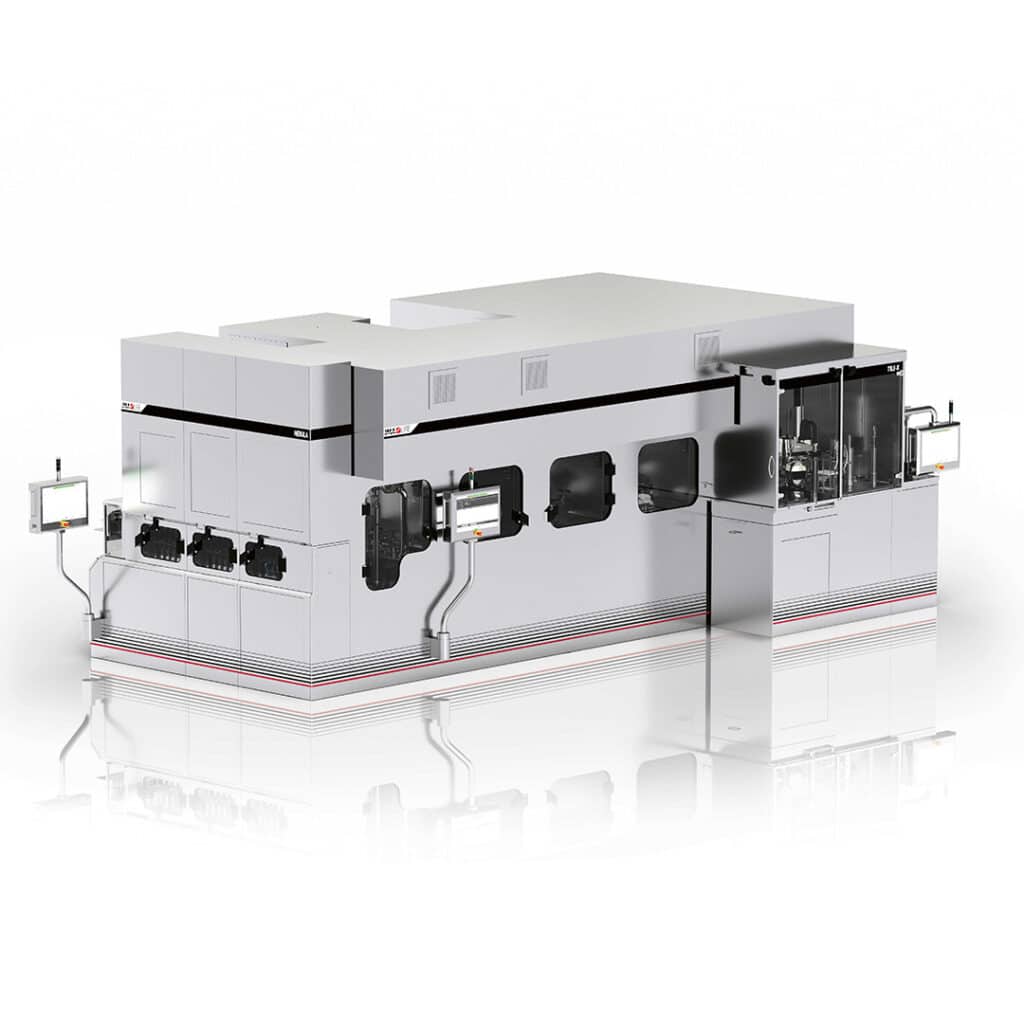
    [overview] => NEBULA is a high-speed decontamination tunnel that sterilises tubs and trays containing RTU material as they enter and transit isolated production lines in continuous mode.
Adopting an unprecedented approach to ensuring 100% sterility of RTU material as it enters and transits isolated production lines, NEBULA is a high-speed decontamination tunnel which integrates seamlessly with IMA LIFE aseptic fill-finish lines. 6-log decontamination is achieved over the entire external packaging surface using aerodynamic containment of highly concentrated Vapour Phase Hydrogen Peroxide (HC-VPHP), while material crosses the tunnel in a matter of seconds. This allows for continuous, high-speed tub introduction, up to six per minute.
This is the ultimate method in the category of surface decontamination technologies, with marked differences compared to the alternative NTT (No-Touch-Transfer) technology or other decontamination solutions.

    [overview_buttons] => Array
        (
            [buttons_on] => 1
            [view_default] => 1
            [buttons_items] => Array
                (
                    [0] => Array
                        (
                            [acf_fc_layout] => file
                            [button_id] =>
                            [button_class] =>
                            [text] => Download the white paper about RTU
                            [icon] => widgets
                            [link] => 33471
                            [tab] =>
                        )

                )

        )

    [sustainability] =>
    [highlights_on] => 1
    [focus_on] => 1
    [versions_on] =>
    [addon_on] =>
    [output_on] =>
[technical_data] => | NEBULA TECHNICAL DATA |
|
| Features | Dimensions |
| Decontamination tunnel dimensions (cleanroom) | 3.7 m (L) x 0.9 m (W) x 1.5 (H) + Inlet/outlet piping up to the ceiling |
| Power supply & ventilation skid dimensions (technical area) | 2.3 m (L) x 1.2 m (W) x 2.8 m (H) |
| AHU Dimensions (Technical Area) | 2.0 m (L) x 0.8 (W) x 2 m (H) |
| Cabinet H2O2 solutions (cleanroom/technical area) | 1.2 m (L) x 0.5 m (W) x 1.6 m (H) |
| Ready-To-Use tub/trays | 3-4” Tubs (standard Nebula), 6” tubs, vial trays (to be requested) |
| Outlet H2O2 catalyser | included |
| Output | Up to 6 RTU/min (max speed @ 30sec 6-log decontamination time) |
| Expected 35% H2O2 solution consumption in production | 6 l/hr |
| H2O2 Storage | 2x20L tank – 35% aqueous hydrogen peroxide solution high purity – low residues |
| Requested utilities |
Ventilation inlet airflow: 450 m3/h from technical area |
Responding to the GMP Annex 1 notes, whereby risks linked to sterility assurance must be minimised during material transfer and supported by high-capability transfer technology, NEBULA accomplishes what no other solution has done before.
[buttons_on] => [cover_focus_buttons] => Array ( [buttons_on] => [view_default] => [buttons_items] => Array ( [0] => Array ( [acf_fc_layout] => file [button_id] => [button_class] => [text] => Download the white paper about RTU [icon] => widgets [link] => 33471 [tab] => ) ) ) [highlights] => Array ( [0] => Array ( [highlight] => High-speed transfer technology ensuring 100% sterility of Ready-To-Use material as it enters the isolator. ) [1] => Array ( [highlight] => 6-log decontamination achieved over the entire external packaging surface. ) [2] => Array ( [highlight] => Maximum safety for both operator and cleanroom by chamber pressure management, avoiding any hydrogen peroxide circulation within the isolator and outside NEBULA. ) [3] => Array ( [highlight] => Continuous, high-speed RTU introduction, up to six tubs/trays per minute: alternative solution to eBeam, pulsed light and NO2 technologies. ) [4] => Array ( [highlight] => Easy size and RTU size changeover: independent of packaging. ) [5] => Array ( [highlight] => Easy connection to aseptic fill-finish plants to enhance their performance. ) [6] => Array ( [highlight] => Excellent sterility assurance according to Annex 1 guidelines. ) [7] => Array ( [highlight] => Minimal impact on layout. ) ) [focus] => Array ( [image] => 30685 [content] => The tunnel is comprised of a series of chambers in which pressure is managed to ensure maximum safety for both operator and cleanroom, avoiding hydrogen peroxide circulation within the isolator. [buttons] => Array ( [buttons_on] => [view_default] => [buttons_items] => ) ) [canonical_url] => [view_default] => [buttons_items] => Array ( [0] => Array ( [acf_fc_layout] => file [button_id] => [button_class] => [text] => Download the white paper about RTU [icon] => widgets [link] => 33471 [tab] => ) ) )
Responding to the GMP Annex 1 notes, whereby risks linked to sterility assurance must be minimised during material transfer and supported by high-capability transfer technology, NEBULA accomplishes what no other solution has done before.
Array
(
    [contact] => marketing.life.it@ima.it
    [no_index] =>
    [thread_tag] =>
    [tile_description] =>
    [tile_speed] => up to 40 RTU units/min.
    [cover_macro] => 28440
    [cover_name_type] => txt
    [cover_name] => TILE-X
    [cover_descriptor] => Gloveless, small-batch RTU fill-finish solution
    [cover_focus_on] => 1
    [news] =>
    [thumbnail] => 34192
    [tag_line] => Innovation goes magnetic.
    [overview] => TILE-X extends the concept of modularity, unprecedented in the aseptic fill-finish process. Based on magnetic levitation technologies, TILE-X enables frictionless component handling with zero risk of particulate generation.
TILE-X is equipped with floating shuttles achieved via magnetic levitation that transport single vials or complete RTU nests, programmed to move freely and capable of executing diverse trajectories according to specific pharmaceutical product requirements.
Thanks to the flexibility of the magnetic transport system, TILE-X allows implementation of a gloveless modular construction philosophy, where each module handles a single phase of the process: introduction of RTU components, delidding and denesting, filling with 100% check-weighing, capping, and crimping with up to 40 units/min. performance.
TILE-X is made of multiple, independent modules, each representing a Grade A gloveless isolated chamber. In order to provide maximum sterility assurance, the modules are designed to maximise first air protection and avoid cross-contamination risks, thanks to the ability to manage pressure cascades between modular chambers, sealing them individually with automatic air-tight doors.
Changing the viable particle plates is performed automatically with no need for manual manipulation. The loading of autoclaved stoppering and capping size parts is performed by RTP port and canister in TILE-X’s preparation module. This dedicated module avoids complex protective bag procedures.
Feeding of Ready-To-Use components into the TILE-X modules can be carried out with No-Touch-Transfer technology or other compact solutions for RTU tub/tray surface decontamination, such as IMA Life’s decontamination technology.


    [overview_buttons] => Array
        (
            [buttons_on] =>
            [view_default] =>
            [buttons_items] =>
        )

    [sustainability] =>
    [highlights_on] => 1
    [focus_on] => 1
    [versions_on] =>
    [addon_on] =>
    [output_on] =>
    [technical_data] =>

    [layouts] => Array
        (
            [0] => Array
                (
                    [image] => 33683
                )

        )

    [technical_video] =>
    [technical_video_image] =>
    [brochure] => Array
        (
            [ID] => 32141
            [id] => 32141
            [title] => TILE-X_EN_Launch brochure
            [filename] => TILE-X_EN_Launch-brochure-1.pdf
            [filesize] => 944212
            [url] => https://ima.it/pharma/wp-content/uploads/sites/2/2024/02/TILE-X_EN_Launch-brochure-1.pdf
            [link] => https://ima.it/pharma/machine/tile-x/tile-x_en_launch-brochure-2/
            [alt] =>
            [author] => 24
            [description] =>
            [caption] =>
            [name] => tile-x_en_launch-brochure-2
            [status] => inherit
            [uploaded_to] => 28379
            [date] => 2025-03-19 15:13:09
            [modified] => 2025-03-27 13:46:05
            [menu_order] => 0
            [mime_type] => application/pdf
            [type] => application
            [subtype] => pdf
            [icon] => https://ima.it/pharma/wp-includes/images/media/document.png
        )

    [main_video] => -DoPefFFhgM
    [gallery] => Array
        (
            [0] => Array
                (
                    [image] => 31806
                    [description] => Viable plate detail
                )

            [1] => Array
                (
                    [image] => 31807
                    [description] => Vial positioning on floating shuttles
                )

            [2] => Array
                (
                    [image] => 31808
                    [description] => Filling and stoppering
                )

            [3] => Array
                (
                    [image] => 31809
                    [description] => Filling and stoppering detail
                )

        )

    [related] => no
    [line_step] => Array
        (
            [0] => 10
        )

    [aseptic] => aseptic
    [market_products] => Array
        (
            [0] => 15
            [1] => 602
            [2] => 613
            [3] => 622
            [4] => 603
            [5] => 618
            [6] => 615
            [7] => 616
            [8] => 617
            [9] => 621
            [10] => 620
            [11] => 619
            [12] => 2624
            [13] => 623
        )

    [market_packs] => Array
        (
            [0] => 2179
            [1] => 2230
            [2] => 2239
            [3] => 3945
            [4] => 2232
        )

    [market_packs_specs] => Array
        (
        )

    [market_brands] => Array
        (
            [0] => 3860
        )

    [market_plants] => Array
        (
            [0] => 3860
        )

    [technologies] => Array
        (
            [0] => 75
            [1] => 74
            [2] => 134
            [3] => 253
            [4] => 254
            [5] => 255
            [6] => 77
            [7] => 78
            [8] => 132
            [9] => 222
        )

    [cover_focus_content] => Ground-breaking fill-finish process innovation, designed to handle Ready-To-Use components using magnetic levitation. Suitable for high-value pharmaceuticals such as biopharmaceuticals and ATMPs with a focus on cell and gene therapies.

    [buttons_on] =>
    [cover_focus_buttons] => Array
        (
            [buttons_on] =>
            [view_default] =>
            [buttons_items] =>
        )

    [focus] => Array
        (
            [image] => 28442
            [content] => TILE-X is ideal for advanced biopharmaceuticals such as ATMPs and cell and gene products. Automation, gloveless concept and magnetic levitation technology ensure high process flexibility and perfect sterility assurance, avoiding any operator-related risks.
            [buttons] => Array
                (
                    [buttons_on] =>
                    [view_default] =>
                    [buttons_items] =>
                )

        )

    [highlights] => Array
        (
            [0] => Array
                (
                    [highlight] => Innovative, fully flexible and adaptable to production process with magnetic levitation for a particle-free transport system.
                )

            [1] => Array
                (
                    [highlight] => Fully gloveless, closed isolator also suitable for installation in grade D. No human intervention required during production.
                )

            [2] => Array
                (
                    [highlight] => Automatic machine set-up and human-less positioning of size parts, including filling needles and all product contact parts.
                )

            [3] => Array
                (
                    [highlight] => Modular design with integrated isolator shell, minimising layout size, building and cleanroom requirements, facilitating fast production scale out.
                )

            [4] => Array
                (
                    [highlight] => Automatic handling of EM plates during set-up and production phase, independently of batch duration. Easy integration with real-time viable monitoring system.
                )

            [5] => Array
                (
                    [highlight] => Performance of up to 40 pcs/min with RTU syringes, vials, pre-capped cartridges (made of glass or polymers).
                )

            [6] => Array
                (
                    [highlight] => Different compounding recipes can be selected for one or more mixable pharmaceutical specialities, also inside each single filled vial.
                )

            [7] => Array
                (
                    [highlight] => Minimization of product loss. Filling circuit fully configurable to product specifications (suspension, cold filling, etc.). Different dosing systems available (peristaltic, volumetric or time-pressure).
                )

        )

    [rel_market] => Array
        (
        )

    [clone_list] => Array
        (
        )

    [embed_iframe] =>
    [seo_image] =>
    [seo_title] => TILE-X: Gloveless, small-batch RTU fill-finish solution
    [seo_description] => Ground-breaking fill-finish process innovation, designed to handle Ready-To-Use components using magnetic levitation.
    [form_price] =>
    [no_follow] =>
    [body_class] =>
    [versions_title] => INJECTA 36 VERSION
    [versions] => Array
        (
            [0] => Array
                (
                    [version_label] => INJECTA 36
                    [version_title] => INJECTA 36
                    [version_thumbnail] => 24421
                    [version_overview] => Enhancing the performance of advanced robotics, the INJECTA 36 raises the bar for high-speed production of Ready-To-Use syringes and pre-capped cartridges. The same cutting-edge robotic technologies assure accurate no-touch-transfer component processing with minimal operator access to the working area.
Introducing an innovative solution for 100% In-Process Control and check-weighing, INJECTA 36 consolidates IMA Life as a key player in the Ready-To-Use segment for automatic filling & closing machines to maximise production performance.

                    [version_overview_buttons] => Array
                        (
                            [buttons_on] =>
                            [view_default] =>
                            [buttons_items] =>
                        )

                )

        )

    [versions_thumbnail] =>
    [versions_tag_line] =>
    [versions_overview] =>
    [versions_overview_buttons] => Array
        (
            [buttons_on] =>
            [view_default] =>
            [buttons_items] =>
        )

    [canonical_url] =>
)
Ground-breaking fill-finish process innovation, designed to handle Ready-To-Use components using magnetic levitation. Suitable for high-value pharmaceuticals such as biopharmaceuticals and ATMPs with a focus on cell and gene therapies.
Array
(
[cover_macro] => 32585
[cover_name_type] => txt
[cover_name] => ISOLATOR SYSTEM
[cover_descriptor] => Isolation solutions for aseptic fill-finish lines
[cover_focus_on] => 1
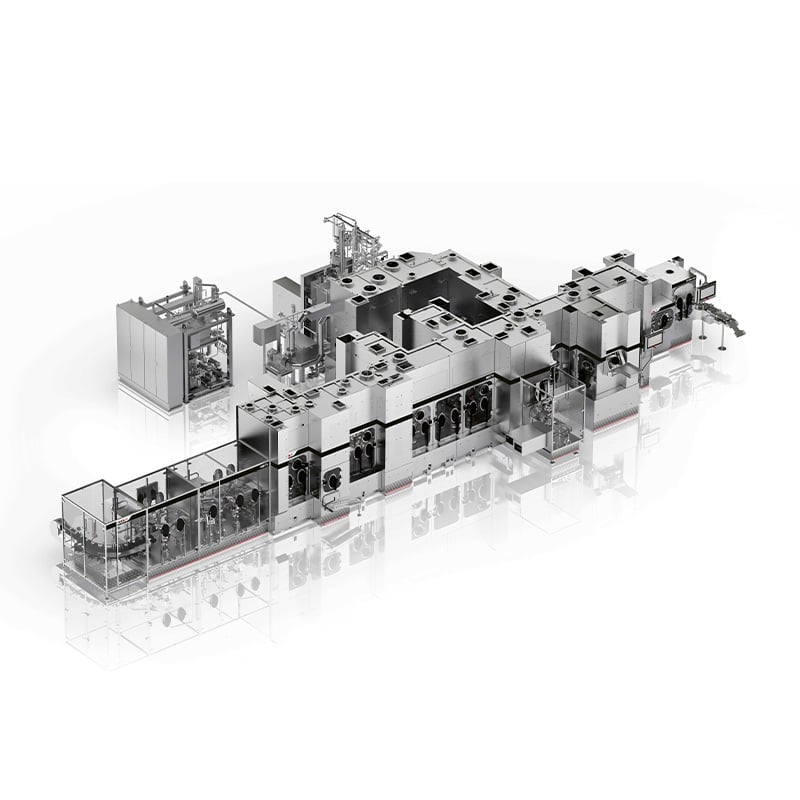
[cover_focus_content] => In the pharmaceutical sector the need to protect the product from contamination due to the presence of personnel or the environment is one of the major drivers for containment. What matters most in aseptic processes is the max. reduction of contamination risk.
[buttons_on] =>
[buttons_items] => Array
(
[0] => Array
(
[acf_fc_layout] => file
[button_id] =>
[button_class] =>
[text] => download brochure
[icon] => description
[link] => 370
[tab] =>
)
[1] => Array
(
[acf_fc_layout] => video
[button_id] =>
[button_class] =>
[text] => WATCH THE VIDEO
[icon] => play_arrow
[link] =>
[autoplay] => 1
)
)
[cover_focus_buttons] => Array
(
[buttons_on] =>
[view_default] =>
[buttons_items] => Array
(
[0] => Array
(
[acf_fc_layout] => file
[button_id] =>
[button_class] =>
[text] => download brochure
[icon] => description
[link] => 370
[tab] =>
)
[1] => Array
(
[acf_fc_layout] => video
[button_id] =>
[button_class] =>
[text] => WATCH THE VIDEO
[icon] => play_arrow
[link] =>
[autoplay] => 1
)
)
)
[news] =>
[thumbnail] => 29325
[tag_line] => Unique potential. Integrated solutions for processing excellence.
[overview] => Combined with automated filling systems for liquids or powders, ISOLATION TECHNOLOGY minimizes the direct human intervention in the processing area and is now a technology that is increasingly and rapidly being implemented by the pharma industry.
Internationally recognized as an expert in advanced aseptic processing applications, IMA Life has gained a wealth of experience in contamination control and can offer a solid understanding of the risks associated with the handling of potent and cytotoxic compounds.
[overview_buttons] => Array
(
[buttons_on] =>
[view_default] =>
[buttons_items] => Array
(
[0] => Array
(
[acf_fc_layout] => file
[button_id] =>
[button_class] =>
[text] => download brochure
[icon] => description
[link] => 370
[tab] =>
)
[1] => Array
(
[acf_fc_layout] => video
[button_id] =>
[button_class] =>
[text] => watch the video
[icon] => play_arrow
[link] =>
[autoplay] => 1
)
)
)
[sustainability] => 
IMA has always been committed to reducing the environmental impact of its equipment, addressing the issue of consumption through design choices, high-efficiency components and optimizing the control dynamics on processing machines such as isolators. Several active projects are currently under development to exploit the advantages offered by advanced solutions for data collection and analysis in order to reduce consumption. These functions as part of the project “SENTINEL”.
* Specific accelerometric sensors will be installed inside the isolators in order to monitor the ventilation motors and ensure they are functioning correctly.
* In the machines that are part of the fill-finish process (such as filling machines, vial washers, alu-capping machines), specific sensors will be fitted to monitor electrical consumption.
* Additional sets of sensors will be provided for HVAC data collection.
[highlights_on] => 1
[highlights] => Array
(
[0] => Array
(
[highlight] => Compliance: fully compliant with all major standards and guidelines for aseptic injectable drug production, including the latest EU GMP Annex 1, FDA guidance on sterile drug manufacturing, ISPE, PIC/S, and PDA recommendations.
)
[1] => Array
(
[highlight] => Flexibility: highly configurable to suit any layout and machine configuration meeting customer’s needs in terms of productivity and operational flexibility.
)
[2] => Array
(
[highlight] => High reliability: engineered for robustness and long-term stability of all functional parameters
)
[3] => Array
(
[highlight] => Sustainability: designed to reduce operational costs, minimize energy consumption, environmental impact and carbon footprint.
)
[4] => Array
(
[highlight] => Adaptability: designed to meet URS requirements for environmental conditions, including specific temperature/humidity setpoints, cold filling/loading, and inert atmosphere control.
)
[5] => Array
(
[highlight] => Multi-role and high-containment ready: can be configured for high-containment production, suitable for handling high-potent, cytotoxic, or biologically hazardous drugs
)
[6] => Array
(
[highlight] => Process automation: ensures maximum risk mitigation with fully validated and automated procedures, such as decontamination, Wash-In-Place, and deactivation, minimizing operator intervention.
)
)
[focus_on] => 1
[focus] => Array
(
[image] => 32587
[content] => The use of this technology on filling machines offers clear economic advantages and operating benefits, assuring higher product sterility levels in addition to improved operator safety.
[buttons] => Array
(
[buttons_on] =>
[view_default] =>
[buttons_items] =>
)
)
[technical_data] =>
[layouts] =>
[technical_video] =>
[technical_video_image] =>
[brochure] => Array
(
[ID] => 28342
[id] => 28342
[title] => BARRIER TECHNOLOGY_EN
[filename] => BARRIER-TECHNOLOGY_EN-1.pdf
[filesize] => 1399866
[url] => https://ima.it/pharma/wp-content/uploads/sites/2/2016/12/BARRIER-TECHNOLOGY_EN-1.pdf
[link] => https://ima.it/pharma/machine/isolation-technology/barrier-technology_en-7/
[alt] =>
[author] => 24
[description] =>
[caption] =>
[name] => barrier-technology_en-7
[status] => inherit
[uploaded_to] => 369
[date] => 2024-02-21 11:38:02
[modified] => 2024-02-21 11:38:02
[menu_order] => 0
[mime_type] => application/pdf
[type] => application
[subtype] => pdf
[icon] => https://ima.it/pharma/wp-includes/images/media/document.png
)
[main_video] => b4dPSVu72eU
[gallery] => Array
(
[0] => Array
(
[image] => 28237
[description] => Complete aseptic filling line for liquid and lyo products
)
[1] => Array
(
[image] => 28238
[description] => Complete aseptic filling line for powder drugs and lyo products
)
[2] => Array
(
[image] => 540
[description] => Material Transfer Isolator
)
[3] => Array
(
[image] => 542
[description] => Vial flow, connection with capper
)
[4] => Array
(
[image] => 18062
[description] => Isolated line for multi-chamber sterile bags: liquid filling overview
)
[5] => Array
(
[image] => 24516
[description] => Internal overview - vial infeed and filling area
)
[6] => Array
(
[image] => 32588
[description] => Vial passthrough
)
[7] => Array
(
[image] => 32589
[description] => Vial feeding
)
[8] => Array
(
[image] => 32591
[description] => Lyo vial loading
)
[9] => Array
(
[image] => 32590
[description] => Lyo vial transfer to the capping
)
[10] => Array
(
[image] => 24520
[description] => Vial collecting table for lyo loading
)
[11] => Array
(
[image] => 24522
[description] => CIP SIP mode – automatic nozzle disconnection
)
)
[related] => no
[rel_market] => Array
(
)
[clone_list] => Array
(
)
[contact] => marketing.life.it@ima.it
[no_index] =>
[versions_on] =>
[addon_on] =>
[technologies] => Array
(
[0] => 132
)
[versions_thumbnail] => 28236
[versions_tag_line] => Lab Version
[versions_overview] => The IMA Life range production also includes the ideal solution to perform Sterility Tests, drastically decreasing false positive results.
Designed for QC Labs, pharma production and pharmacies, the IMA Life STERILITY TEST ISOLATORS are equipped with unidirectional air flow system and guarantee a constant positive pressure gradient between the chambers and the external lab environment.
[versions_overview_buttons] => Array
(
[buttons_on] =>
[view_default] =>
[buttons_items] =>
)
[market_products] => Array
(
[0] => 15
[1] => 602
[2] => 613
[3] => 622
[4] => 603
[5] => 615
[6] => 616
[7] => 617
[8] => 621
[9] => 620
[10] => 619
[11] => 2624
)
[market_packs] => Array
(
[0] => 2005
[1] => 2056
[2] => 2171
[3] => 2179
[4] => 2230
[5] => 3945
)
[market_brands] => Array
(
[0] => 3860
)
[market_plants] => Array
(
[0] => 3860
)
[line_step] => Array
(
[0] => 9
)
[tile_description] =>
[tile_speed] =>
[aseptic] => aseptic
[thread_tag] =>
[market_packs_specs] => Array
(
)
[output_on] =>
[seo_title] => ISOLATOR SYSTEM: Isolation solutions for aseptic fill-finish lines
[seo_description] => Combined with automated filling systems for liquids or powders, minimizes the direct human intervention in the processing area.
[seo_image] =>
[embed_iframe] =>
[form_price] =>
[no_follow] =>
[body_class] =>
[versions_title] =>
[versions] =>
[canonical_url] =>
)
In the pharmaceutical sector the need to protect the product from contamination due to the presence of personnel or the environment is one of the major drivers for containment. What matters most in aseptic processes is the max. reduction of contamination risk.