menu

When discussing the processing of cosmetic creams, we are not referring to a single, standardized method. Instead, we are entering a world of formulations, ingredients, and intricate techniques, much like cooking a recipe. Just as a chef selects the right combination of ingredients within a single recipe, each requiring different cooking techniques to achieve the perfect dish, manufacturers rely on a variety of specialized machines and equipment to process different ingredients within a formulation. This complexity underscores the importance of an integrated and flexible approach to processing, one that is not just about mixing but about managing an entire system of interdependent elements.
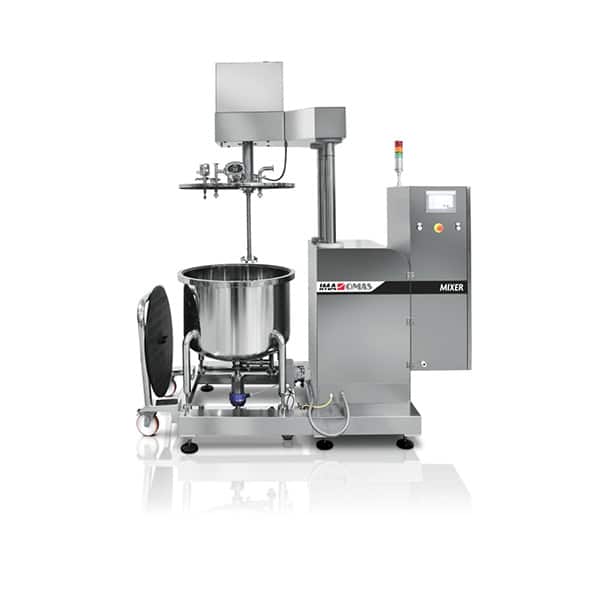
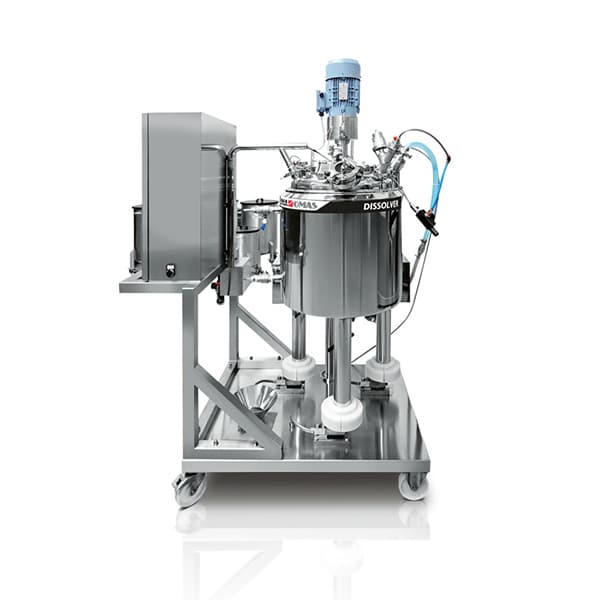
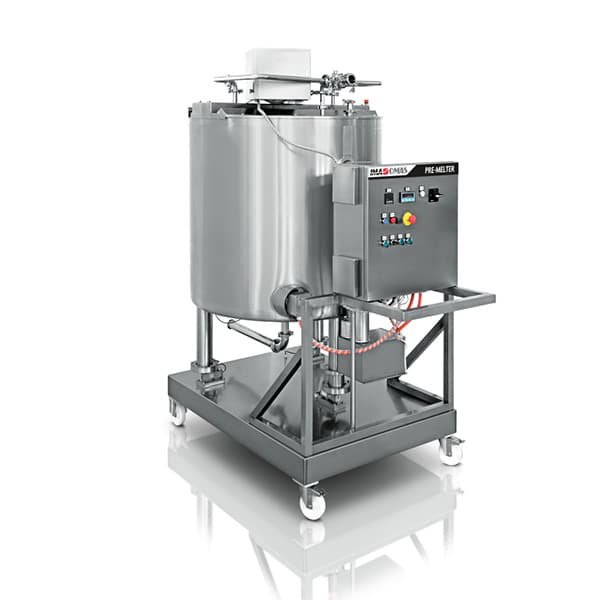
The production of a cosmetic cream involves multiple steps and equipment, each designed to handle different raw materials, from fatty substances to additives and fragrances. Various tanks and pre-melters dissolve ingredients before they are introduced into the main mixing machine. The mixer is the heart of the process, where ingredients are blended, dispersed, homogenized, and heated to create a stable, high-quality product. Managing these variables correctly is essential to ensure the right texture, stability, and functionality of the final cream.
A key aspect of the mixing process is the control of air incorporation. High-speed turbines naturally introduce air into the product, causing it to expand and form bubbles. To prevent this from affecting the cream’s quality, under vacuum technology is applied during critical phases of mixing, ensuring a bubble-free and homogeneous product. This is particularly crucial for formulations sensitive to oxidation, such as those containing vitamins and other active ingredients, where limiting air exposure preserves product efficacy.
Different formulations also require specialized mixing techniques. Coaxial agitation, for instance, combines opposing rotational movements to enhance ingredient dispersion, ensuring a thorough and even mix. The positioning of the blades is carefully designed to direct product flow in multiple dimensions, creating an optimal balance between mixing efficiency and temperature distribution. For some other specific products, such as those extremely viscous, planetary movement can be preferred, as the agitator not only revolves around its own axis but also orbits around the mixing bowl surface.
To further optimize processing, an advanced recirculation system can be employed. Instead of allowing the product to gradually return to the bottom after being pushed to the tank’s sides by the high-speed turbine, recirculation channels direct the just-processed product back to the upper section. This reduces lag time, significantly enhances homogenization efficiency, and shortens overall processing time, improving productivity without compromising quality. This technique ensures a more efficient processing of the cream reducing the time needed to process the batch.
Another critical aspect is temperature control. Jacketed vessels provide precise temperature control, with options for water heating up to 85°C or steam heating for even higher temperatures. Ensuring that heat is distributed evenly across the tank is particularly challenging for large production batches. To achieve uniform temperature regulation, the heating or cooling liquid is forced between the tank’s double walls in a spiral path. This method, which maximizes surface contact, ensures consistent heat distribution across all points, preventing localized overheating or cooling and maintaining the integrity of temperature-sensitive formulations.

While standard machines can handle a broad range of applications, true efficiency comes from customization. When processing creams, every aspect of the system must be tailored to the formulation’s needs, the production plant, and the productivity requirements. This level of flexibility ensures that even highly specific or sensitive formulations can be processed with precision.
Process efficiency extends beyond mixing, encompassing the integration and optimization of upstream and downstream processes. During the research and development phase, after prototyping the formula, small-scale production mixers can be used to assess the machinability of ingredients together, allowing manufacturers to fine-tune laboratory formulations based on characteristics that can only be evaluated in real production conditions. Once the formula is perfected, the precise sequence of actions—such as mixing speed, heating and cooling times, and temperature settings—can be programmed into the HMI to fully automate the process, ensuring perfect repeatability. Dosing can also be automated through software-controlled mechanisms, guaranteeing that each ingredient is dispensed with exact precision. Additionally, rapid batch changeovers with full sanitation capabilities are essential to guarantee high productivity standards. Automatic cleaning-in-place (CIP) systems enable thorough and efficient washing using rotating spray balls, where even the choice of detergents can be tested to ensure optimal cleaning performance. For smaller-scale production, tiltable mixers further simplify cleaning by providing direct access to the mixing chamber, ensuring the highest levels of hygiene and operational efficiency.
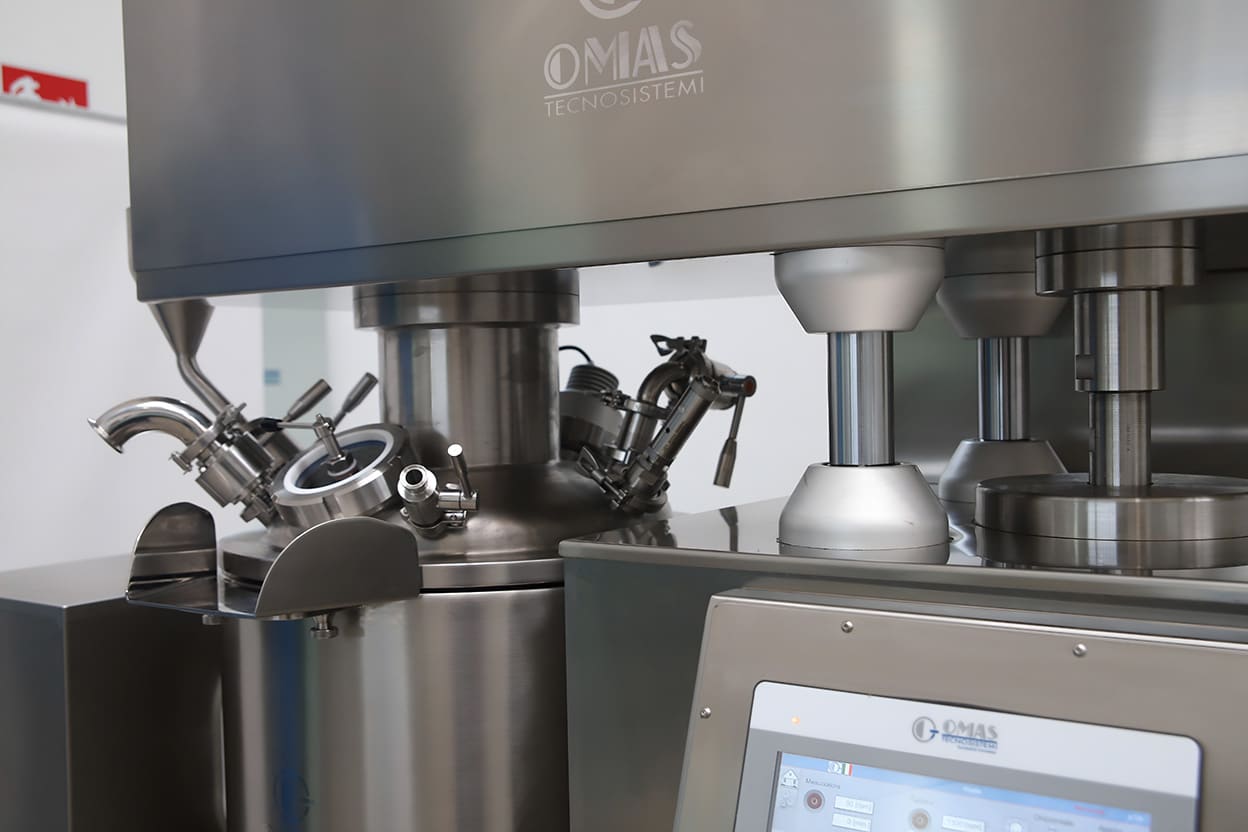
What truly distinguishes a processing approach is the ability to go beyond individual machines and offer a fully integrated, flexible system tailored to the specific needs of each manufacturer. The design of a process is not merely about selecting the right mixer—it involves orchestrating every aspect, from pre-melting and ingredient dosing to mixing, storage, and final transfer, ensuring that all mechanical and software elements align seamlessly with the production requirements.
Managing all project phases internally—from design and engineering of the machine to carpentry of every component, to software development—ensures total control over every aspect of quality, precision, and customization. This allows manufacturers to work with a single point of contact, adapting every stage of the project to their specific needs while ensuring long-term scalability. Material quality plays a fundamental role in this process: the internal roughness of the tank directly affects bacterial proliferation and friction, making mirror-polished surfaces essential for both hygiene and product flow.
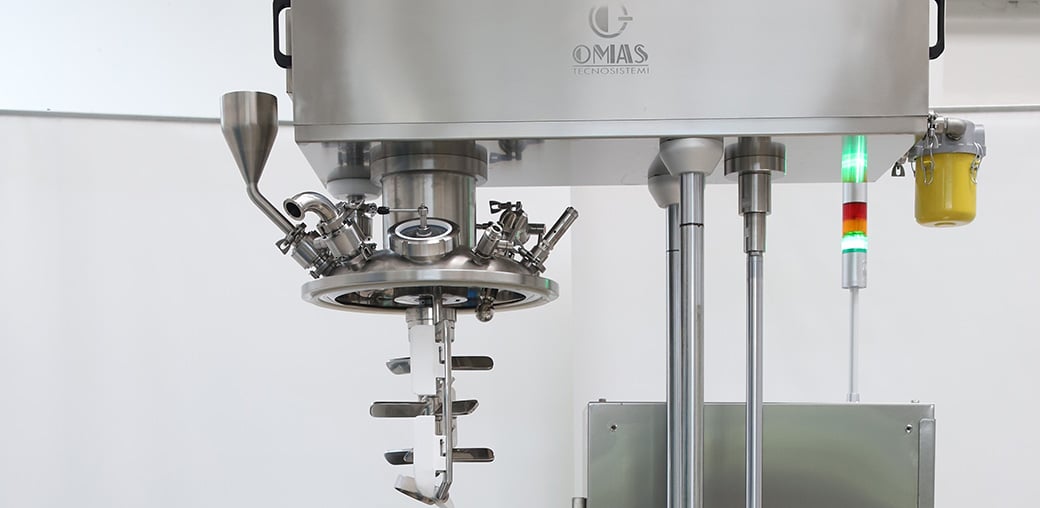
This expertise extends to full system integration, covering transfer mechanisms, advanced temperature control, precise dosing systems, as well as the coordinated system of pipelines, pumps, and storage vessels that ensure a seamless flow of materials before and during the mixing phase, interconnecting the entire processing system. Unlike solutions that rely on third-party suppliers for auxiliary systems, a fully managed process ensures seamless engineering of every component, optimizing reliability and efficiency. Whether dealing with high-viscosity creams or delicate emulsions, this comprehensive and customizable approach guarantees superior process consistency while allowing manufacturers to adapt to evolving market demands.
In an industry driven by continuous innovation, where new formulations and enhanced skincare ingredients emerge regularly, processing solutions must be both reliable and adaptable. Experience in handling diverse formulations and process variables translates into smarter, more effective designs. Flexibility in engineering and customization ensures that each system aligns perfectly with a manufacturer’s specific production needs.
A well-designed process is not just about making a cream—it’s about creating a system that optimizes efficiency, ensures quality, and supports innovation. And when all of this is managed by a single expert partner, manufacturers gain not only high-performance equipment but also the peace of mind that their entire processing line is designed for long-term success.
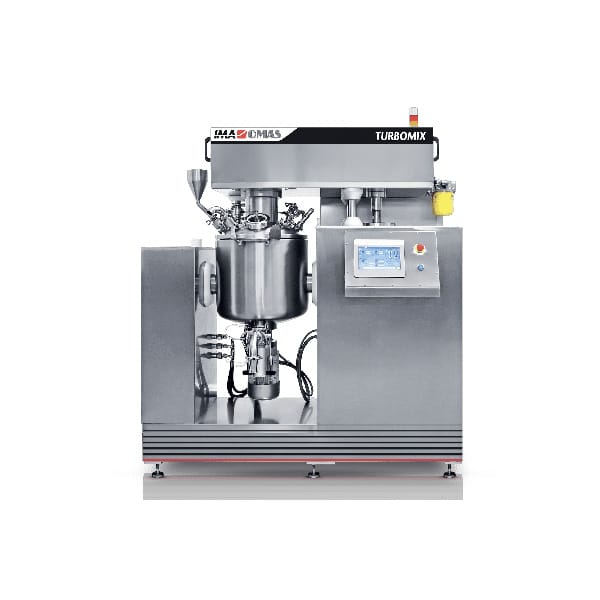
| TURBOMIX | MIXER |
|
Undervacuum turboemulsifier |
Mixing technology |
 |
 |
| DISSOLVER | PRE-MELTER |
|
Dissolving powder into liquids |
Pre-melting phase for fat products |
 |
 |