menu

The production of make-up products is a delicate dance of precision, creativity, and technical expertise. For manufacturers, downtime is more than just a frustrating pause in activity—it’s a direct threat to efficiency, profitability, and their ability to meet the exacting demands of the cosmetics market. Yet, some delays are an inherent part of producing high-quality, luxurious make-up products, while others can be minimized with the right strategies and technologies.
The cosmetics industry thrives on its ability to deliver beauty, both in the product itself and in its presentation. This demand for perfection introduces unique challenges that, while necessary, can naturally slow down production. For instance, luxury packaging—designed to captivate consumers—is often as fragile as it is beautiful. Mascara tubes or compact cases require careful handling to prevent damage during filling and assembly, meaning production lines must prioritize precision over speed. Innovations like velvet-coated hoppers for mascara tubes demonstrate the lengths manufacturers go to in ensuring the integrity of such high-end packaging.
The products themselves also add complexity. Consider mascara: its high viscosity demands careful management during dosing. Unlike low-viscosity liquids that respond quickly and predictably to pressure, mascaras move slowly and with resistance, requiring specialized equipment and techniques to achieve accurate and efficient filling. The production environment, too, plays a critical role—temperature control is vital to preserving the product’s integrity, as mascara is typically processed at ambient temperatures rather than heated.
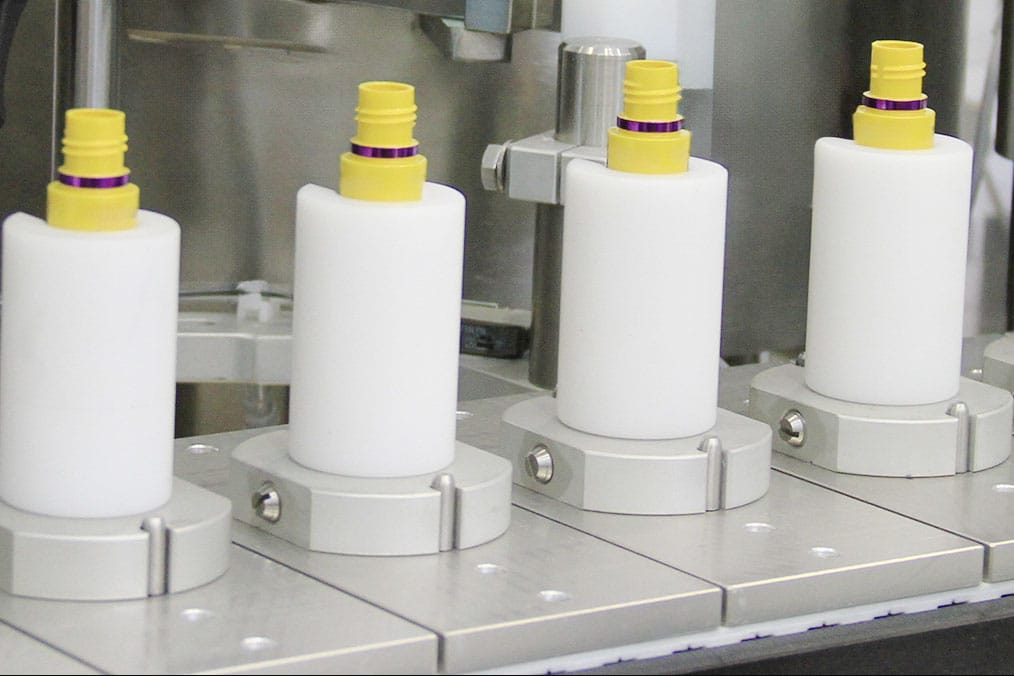
Mascara godet transport
While some aspects of make-up production inherently require a slower, more deliberate approach, there are significant opportunities to streamline processes and reduce unnecessary downtime. A prime example lies in the technology used for filling and dosing. Traditional systems often struggle with the delays caused by viscous formulations, leading to inconsistent dosing or the dreaded “spaghetti effect”—when product extrudes unevenly, compromising precision and efficiency. Advanced dosing systems overcome this by using compact, tube-free nozzles mounted directly on the dosing head. This design minimizes delays, ensuring the product flows smoothly and accurately into its container without compromising quality.
Similarly, the ability to manage changeovers efficiently is a game-changer for manufacturers. With the wide variety of formats required in the make-up sector, frequent format changes are inevitable. Modular components, like innovative godets, make switching between formats seamless, drastically reducing the time spent adapting the line to new products. This flexibility allows manufacturers to respond quickly to market demands without sacrificing productivity.
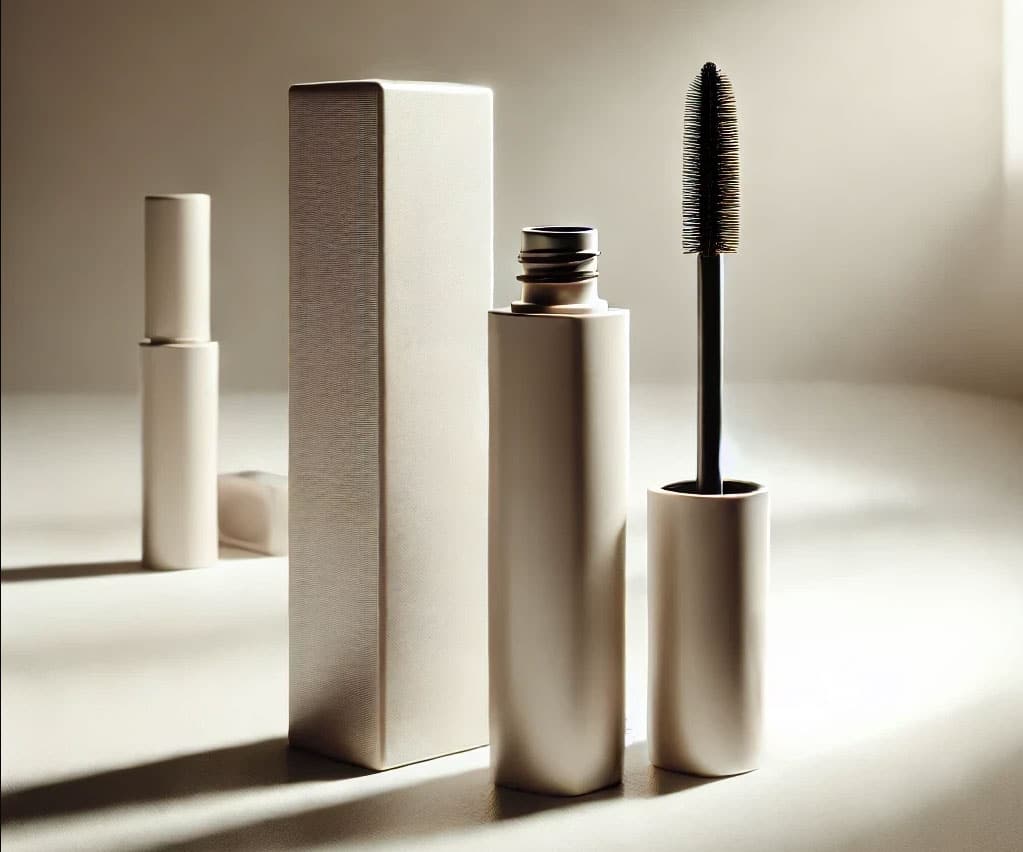
Mascara
Cleaning and maintenance, traditionally labor-intensive tasks, have undergone significant advancements. Sticky formulations like mascara can make cleaning dosing systems particularly challenging, but the removable dosing modules can transform the process. These modules offer a double advantage: first, they can be easily extracted from the machine, making cleaning far more comfortable and efficient compared to performing the task in place. Second, if a second module is available, it can be quickly installed while the first is cleaned separately and thoroughly. This ensures that the machine is back in operation almost immediately, drastically reducing downtime while maintaining high hygiene standards.
Additional innovations address the intricate details of product assembly, such as the integration of the scraper for the mascara brush. This essential component, positioned at the opening of the mascara tube, plays a critical role in ensuring the applicator is evenly coated while removing excess product during extraction. What sets these methods apart is the precision of the scraper’s application: rather than relying on traditional top-down insertion, innovative techniques simulate the natural motion of three human fingers applying the scraper from the sides. This approach mirrors the delicate yet firm touch needed to position the scraper securely and evenly, ensuring its functionality without compromising the integrity of the packaging.

GM-BLOK – mascara and lipgloss filling and capping machine
Reducing downtime in make-up production is not just about resolving individual challenges—it’s about building a process that consistently delivers precision, efficiency, and quality. The right technologies play a crucial role in achieving these goals, making the choice of tools and partners a decisive factor. With systems designed to meet the unique demands of cosmetics manufacturing, companies can transform potential obstacles into opportunities, ensuring they stay ahead in a competitive market while maintaining the highest standards for their products.
Join us on May 28-29 at Omas Tecnosistemi for a two days event where voices across the personal care supply chain come together.