Personal & Home Carekeyboard_arrow_rightA format that connects markets: roll-on across personal care and therapeutics
menu

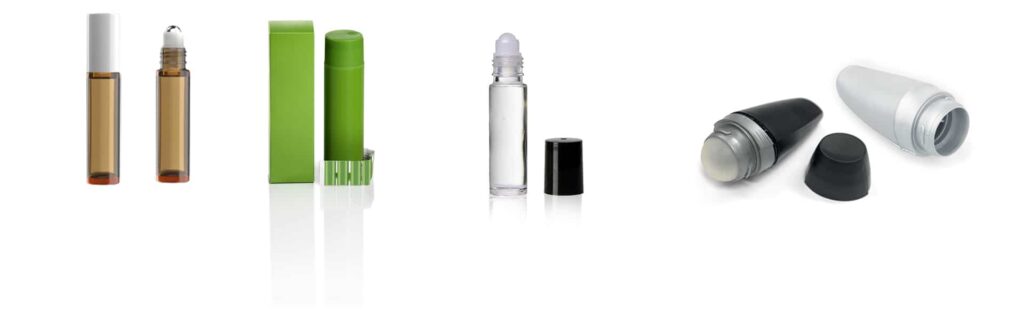
Roll-on packaging has evolved far beyond its original association with deodorants. Today, it accommodates a wide range of formulations across personal care, skincare, and even topical pharmaceutical applications. From classic antiperspirants to cooling serums, under-eye treatments, blemish correctors, soothing balms, and medicated liquids, the roll-on format has become a versatile way to deliver controlled doses directly to the skin. Its combination of ease of use and precise, localized dosing makes it ideal for products that need both practicality and accuracy.
This evolution mirrors a broader convergence in the market, where personal care and pharma increasingly share the same expectations for product performance. Cosmetics are becoming more treatment-oriented, while topical pharmaceuticals embrace more sensorial, user-friendly formats. The roll-on sits naturally at this intersection: practical enough for everyday routines, yet suitable for formulas that demand reliability and controlled dispensing.
Production challenges in roll-on filling and assembly
While roll-on products may appear simple to the end user, their production reveals a mix of mechanical, ergonomic, and process-stability challenges. Unlike standard bottles, roll-on formats often feature non-self-standing shapes or designs optimized for consumer grip rather than production stability. These containers tend to tip or wobble as soon as they enter a conveyor system, making stable handling a primary concern for any line configuration.
A second complexity lies in the wide variability of formats – not only across brands, but often within the same product portfolio. Bottle shapes, diameters, sphere supports, and caps can differ substantially, while product volumes range from compact travel formats to larger skincare roll-ons. This variability directly affects line behavior and demands an architecture capable of maintaining performance despite constantly changing geometries.
Speed remains another crucial factor. Roll-on products—especially deodorants—are typically produced at medium-to-high output, requiring each mechanical step to be repeatable, stable, and coordinated. At these speeds, even minor inconsistencies in how a bottle sits inside its holder, how a ball holder is pressed, or how a cap engages with the thread can cause stoppages and rework. Meanwhile, the roll-on assembly itself introduces its own sensitive operations: the press-fit insertion of the ball holder, the correct “marriage” of threads during pre-torque, and the final torque that defines the user’s opening experience. All of these steps must be executed with precision to avoid leaks, misassemblies, and cosmetic defects.
Finally, the diversity of applications—from deodorants to skincare or topical solutions on the border between personal care and pharma—adds further considerations. Glass containers, small vials, or premium formats require gentler handling, enhanced accuracy, and highly controlled assembly forces.
Engineering requirements and process logic
Meeting these challenges requires a clear technological logic capable of supporting both production speed and container variability.
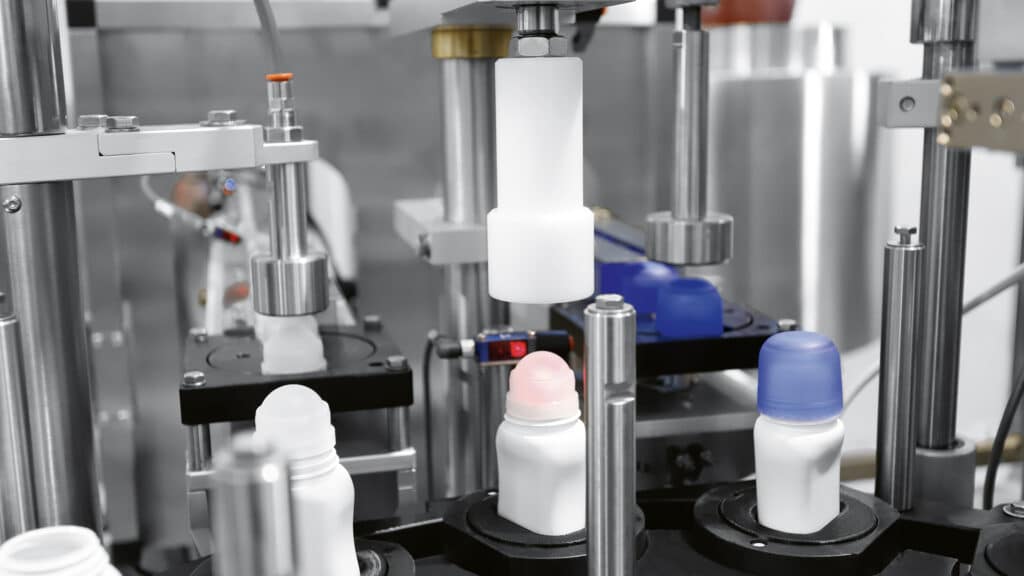
A key element is the use of dedicated pucks, designed to stabilize each container and provide a uniform base for the entire process. By creating a standard footprint, pucks eliminate the instability typical of many roll-on bottles and enable consistent handling throughout filling, assembly, and discharge.
The choice between rotative and linear filling configurations is also strategic.
Another critical engineering requirement is the management of dosing groups. Here, the use of a Docking station becomes decisive: a removable dosing cart allows for external cleaning, quick maintenance, and rapid changeover by swapping complete pre-prepared groups. This approach minimizes downtime and avoids exposing the main machine to the risk of contamination.
On the assembly side, the process must guarantee:
These steps form the core of roll-on assembly quality, where IMA applies the precision typically reserved for pharma applications. A laser fork then evaluates the final cap height to confirm that the closing operation has been completed correctly, triggering rejection in case of anomalies.
Together, these engineering choices create a stable, predictable environment where even delicate or irregular roll-on formats can be processed with confidence.
Expertise that shapes technology
Taken together, these elements offer manufacturers a controlled, stable, and scalable process that transforms the inherent complexity of roll-on production into a smooth and reliable workflow. As the roll-on format expands beyond traditional deodorants and increasingly bridges personal care and pharma, this integration of engineering logic and application expertise becomes even more decisive. Modern formulations require equipment capable of adapting to different textures and container geometries without compromising speed or quality.
This capability stems from years of experience across a diverse range of roll-on products: lightweight plastic bottles, compact bottles for skincare and perfumes, or delicate glass-based applicators used for targeted treatments. Whatever the format, the line maintains accuracy and stability, with stations that can be activated or bypassed depending on the needs of each product family. This flexibility enables manufacturers to manage roll-ons alongside traditional bottles or small applicators with minimal reconfiguration.
In a landscape where cosmetics adopt functional behaviours and topical pharmaceuticals embrace more user-friendly formats, IMA provides a production environment designed to grow with these converging demands.
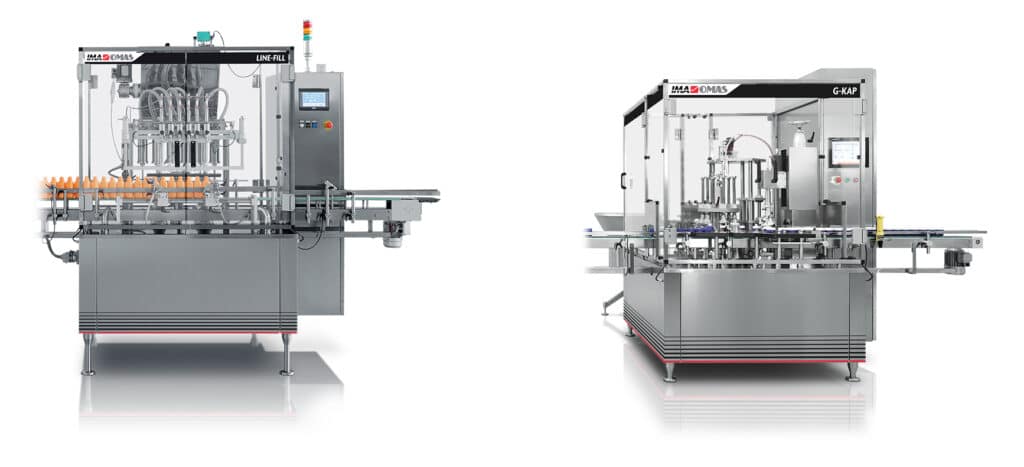
LINE-FILL and G-KAP |
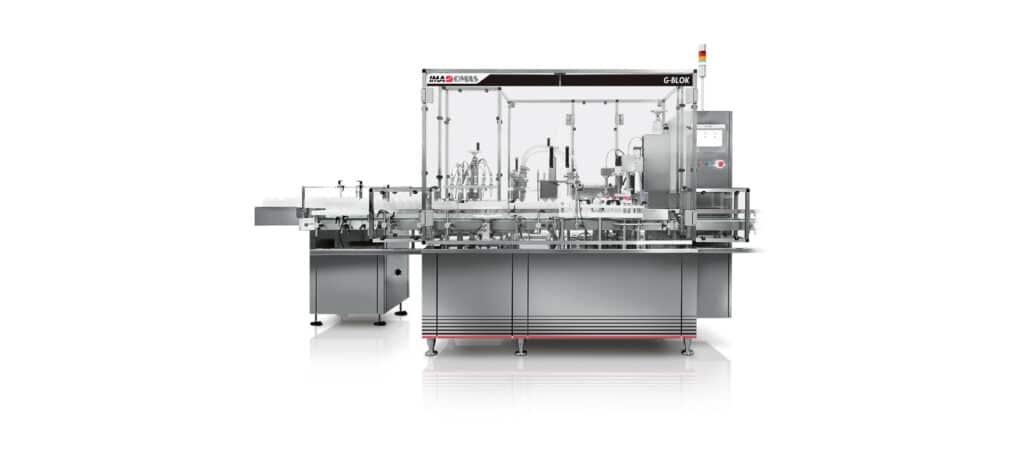
G-BLOK |
 |
 |
Configuration for high format variability and medium to high speeds |
Configuration with a compact footprint for low to medium speeds |