
menu

Exploring the expanding suppository market, its clinical relevance, and the cutting-edge technologies driving efficiency and precision
The suppository market: growth, usage, and innovation
The global pharmaceutical suppository market is a growing sector, driven by demographic and clinical factors, as well as continuous innovations in materials and drug delivery technologies. Although the use of suppositories may seem limited compared to other drug forms, they represent a crucial therapeutic solution in many clinical settings, offering significant advantages over more traditional administration routes, such as oral or intravenous.

Growth of the global suppository market
The pharmaceutical suppository market reached an estimated value of $1.606 billion in 2022 and is expected to grow to $2.802 billion by 2032, with a compound annual growth rate (CAGR) of 5.7%. This growth is supported by several factors:

Below are the most common applications, recent innovations, and rare and specialized use cases.
| Category |
Active Ingredient |
Indication |
| Pain relievers and antipyretics | Paracetamol |
Fever and pain |
| Diclofenac | Inflammation | |
| Indomethacin | Arthritis and inflammation | |
| Antispasmodics and gastrointestinal Treatments | Hyoscine butylbromide |
Abdominal cramps |
| Metoclopramide | Nausea and vomiting | |
|
Laxatives and constipation treatments |
Glycerin | Laxative effect |
| Bisacodyl | Bowel stimulation | |
| Neurological disorder medications | Diazepam | Seizures and anxiety |
| Paraldehyde | Refractory seizures | |
| Hemorrhoid and anorectal treatments | Corticosteroids | Local inflammation |
| Local anesthetics | Pain and itching |
Market segmentation of suppositories
The suppository market is segmented based on various criteria, including the type of suppository, the base used, and the geographic region. Below are the main segments:
IMA Sarong solutions and synergies with IMA
IMA Sarong is one of the leading companies in the suppository market, not only for the production of advanced machines for thermoforming and filling suppositories but also as a supplier of packaging materials for suppositories and ovules. Its range of solutions covers the entire suppository production cycle, providing high-precision machines and compatible materials that ensure maximum efficiency. In particular, IMA Sarong holds an 80% market share in large-scale suppository production.
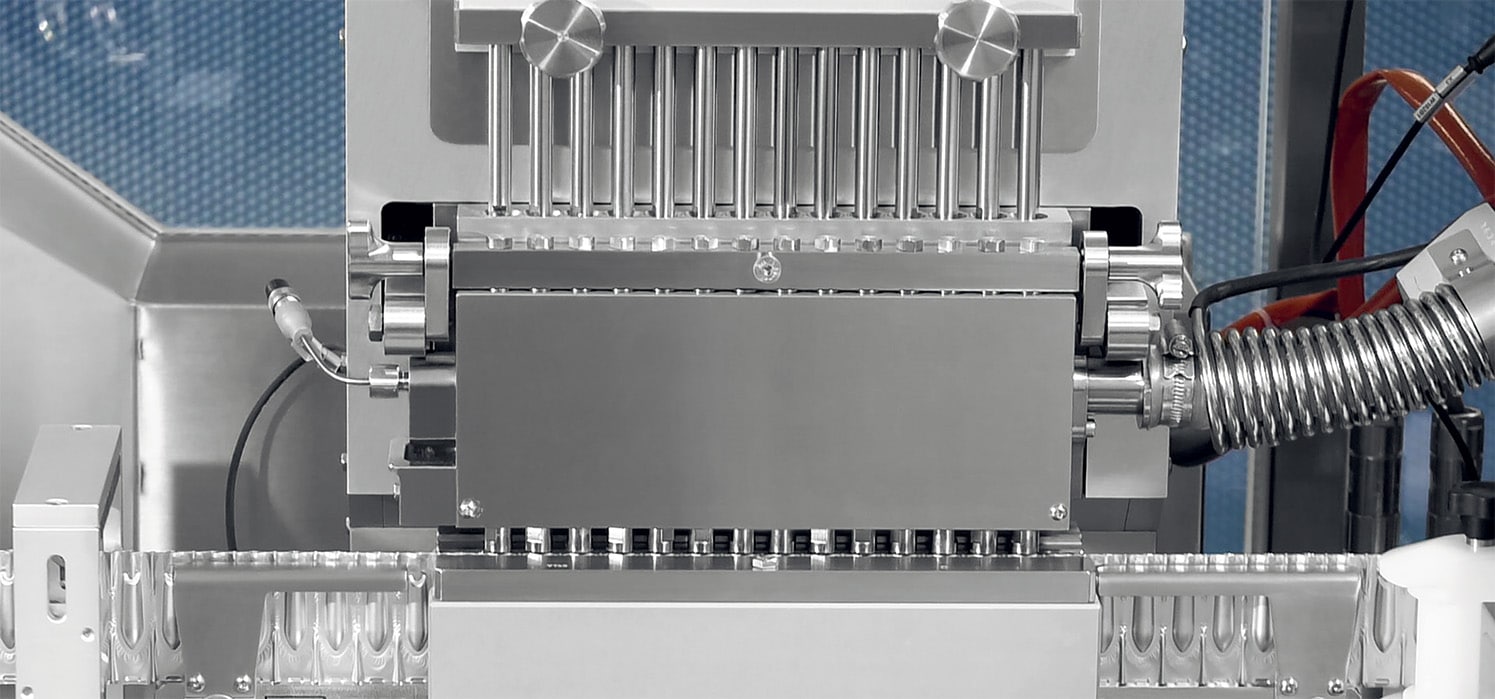
IMA Sarong’s thermoforming machines are designed to work with a wide range of raw materials, including fatty, miscible, and emulsifying bases. These machines ensure precise product dosing and optimal packaging, reducing waste and maximizing production efficiency. Additionally, IMA Sarong provides specific packaging materials, such as films and preformed films, perfectly compatible with its machines, offering a complete solution for customers.
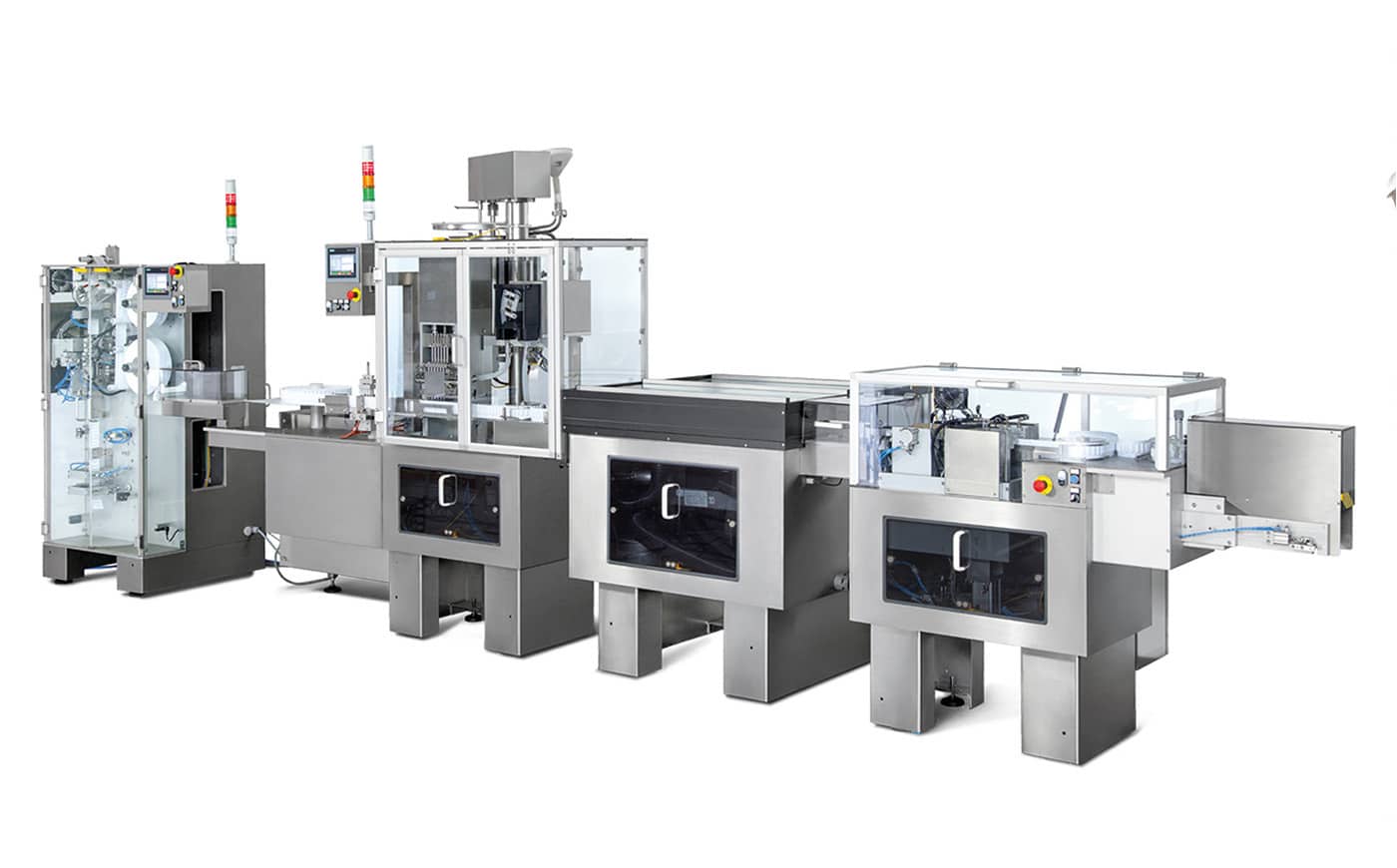
The integration of IMA Sarong machines with IMA’s packaging solutions enables the creation of complete production lines, managing the entire cycle from raw material processing to final packaging. Raw material processing is carried out through mixers and, followed by suppository filling, insertion of the suppository into the carton, and finally placing the carton into the case with our end-of-line solutions.
Conclusion
The suppository market is set for continuous growth, driven by demographic, clinical, and economic factors that make this therapeutic form increasingly essential. Although suppositories may seem like a less widespread solution, their ability to ensure controlled and targeted drug release makes them indispensable for a wide range of clinical conditions.
In this expanding market, IMA Sarong stands out as a crucial player, thanks to its technological leadership in the production of advanced thermoforming and filling machines for suppositories. The company’s ability to provide highly efficient solutions, integrated with IMA’s processing and packaging systems, not only optimizes the production process but also enables pharmaceutical companies to better meet the growing market demands. With its consolidated expertise and commitment to innovation, IMA Sarong is an indispensable partner for those seeking quality, precision, and sustainability in the pharmaceutical suppository landscape.
| SAAS Series | SL 6 |
|
Vertical form, fill, seal machine for suppository |
Modular line for suppositories and ovules |
 |
 |